Phishing Training
Phishing Awareness Training Exercise
A guided, consent-based learning exercise using clearly controlled, safe simulated examples. Build practical skills to recognize and report phishing.
$4.95one-time · USD

What you'll learn
Six practical modules
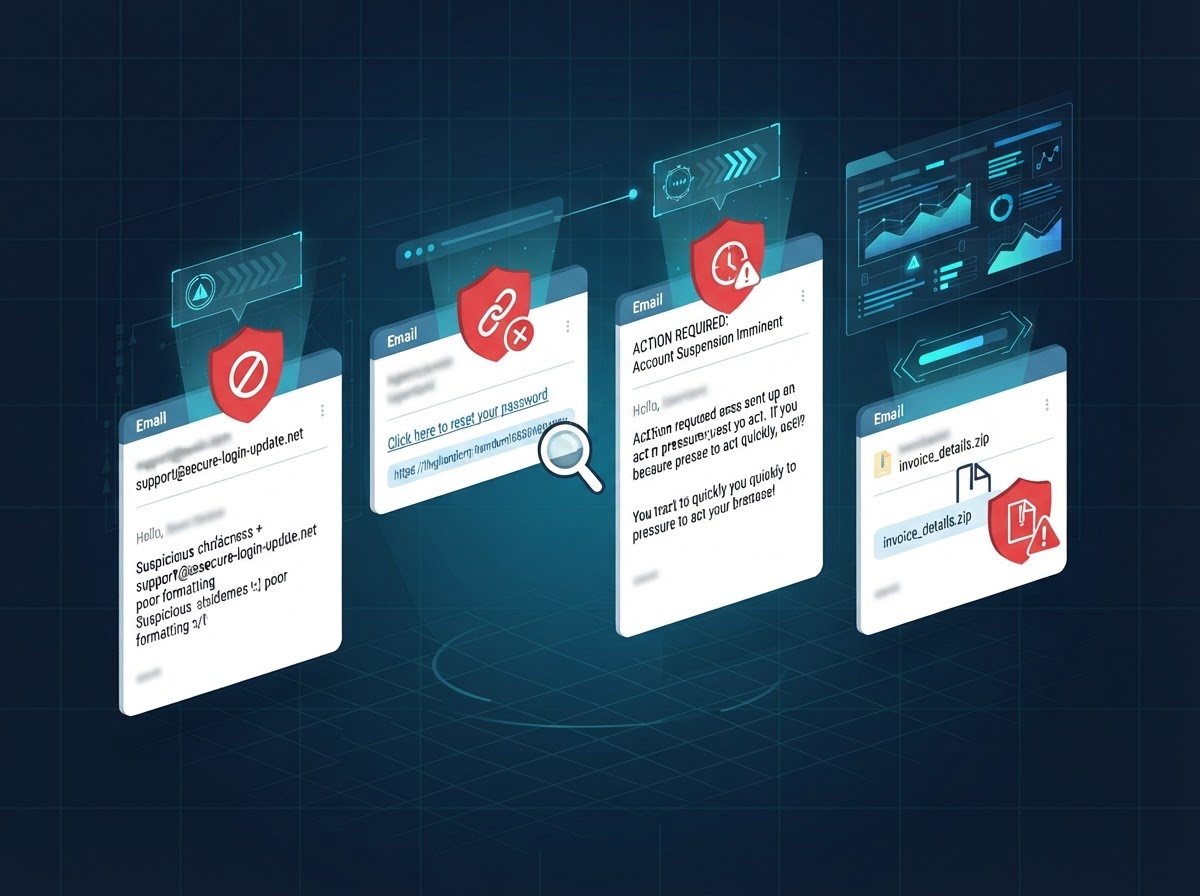
Short, focused training with safe illustrative phishing examples and link-inspection exercises.
Recognizing suspicious senders
How to inspect sender domains, spot lookalike addresses, and verify display names.
Inspecting links safely
Hover-preview techniques, reading real URLs, and avoiding shortened or redirect links.
Urgency & pressure tactics
Why attackers create false deadlines and how to slow down before acting.
Attachments & malware
Identifying risky file types and unexpected attachments.
Credential & payment requests
Verifying requests for sensitive information through a known, trusted channel.
Reporting & escalation
Who to contact and what information to capture when you suspect phishing.
What's included
- Short training modules
- Safe illustrative phishing examples
- Link-inspection & sender-verification exercises
- Reporting & escalation guidance
- Completion score & educational feedback
- Downloadable completion summary
What this is — and isn't
- • This is a consent-based educational exercise using controlled, safe examples.
- • We never collect real passwords, authentication codes, or payment credentials.
- • We never collect sensitive employee information.
- • Training does not guarantee that you or your organization will be secure.
- • Any future email-based phishing simulation requires documented authorization, an approved scope, and appropriate privacy safeguards.